🌍 Detoxifying the Material Economy - The Next Industrial Reset
For decades, the world has been focused on carbon emissions as our biggest pollutant from fossil fuels (and rightly so). But there is another hidden impact of our fossil fuel-dependence: Toxicity. Hidden in plain sight is an ever-compounding environmental externality of our reliance on hydrocarbons: in packaging, clothing, food, and throughout our homes as well as our water, soil, and natural ecosystems.
Exponentially accelerating from the 1950s: on the back of the proliferation of, and subsequent downstream expression of cruder fuels, chemical production has increased roughly 50-fold and is projected to triple again by 2050. Carbon-based chemicals have become critical to modern life. But alarmingly, the universe of known chemicals and mixtures used in products globally and registered on the market has been expanding dramatically to the point where we can’t keep track.
Scientists concluded in 2022 that the "Planetary Boundary" for so-called “novel entities” — synthetic chemicals and other human-made substances — had been breached. And by breached, this means the annual production and release of such substances exceeds the global capacity for assessment and monitoring. The only viable conclusion is that this puts the health of the Earth system at risk (including likely us - the system's biggest benefactors).
💊 The Human Health Lens
Our focus at Regeneration.VC on circularity technologies and the material transition has always been framed in the context of planetary health. But it is apparent to us that we need to acknowledge even more explicitly in our thesis today that it our work increasingly addresses human health issues too. This will become a sharper lens for our strategy.
The same chemistry stacks that make consumer products waterproof, shelf-stable or stain-resistant are now being linked to hormone disruption, reproductive harm, and immune system dysfunction. The World Health Organization says endocrine-disrupting chemicals have been associated with hormone-related cancers, obesity, diabetes, cardiovascular disease and reproductive problems.
And unlike carbon emissions or ocean plastics where impact is often perceived as long-term and diffuse - toxicity is immediate and personal. 5 in 6 Americans want their government to intervene.
And this is not a niche health externality. It is a hidden system cost embedded in the global economy. Systemiq estimates that just four chemical groups — phthalates, bisphenols, pesticides and PFAS — are already imposing up to $3 trillion a year in preventable costs, including healthcare costs and ecological damage. Most alarmingly, the Systemiq report also warns that continued exposure could contribute to 200–700 million fewer births globally between 2025 and 2100 under a current-exposure pathway. `
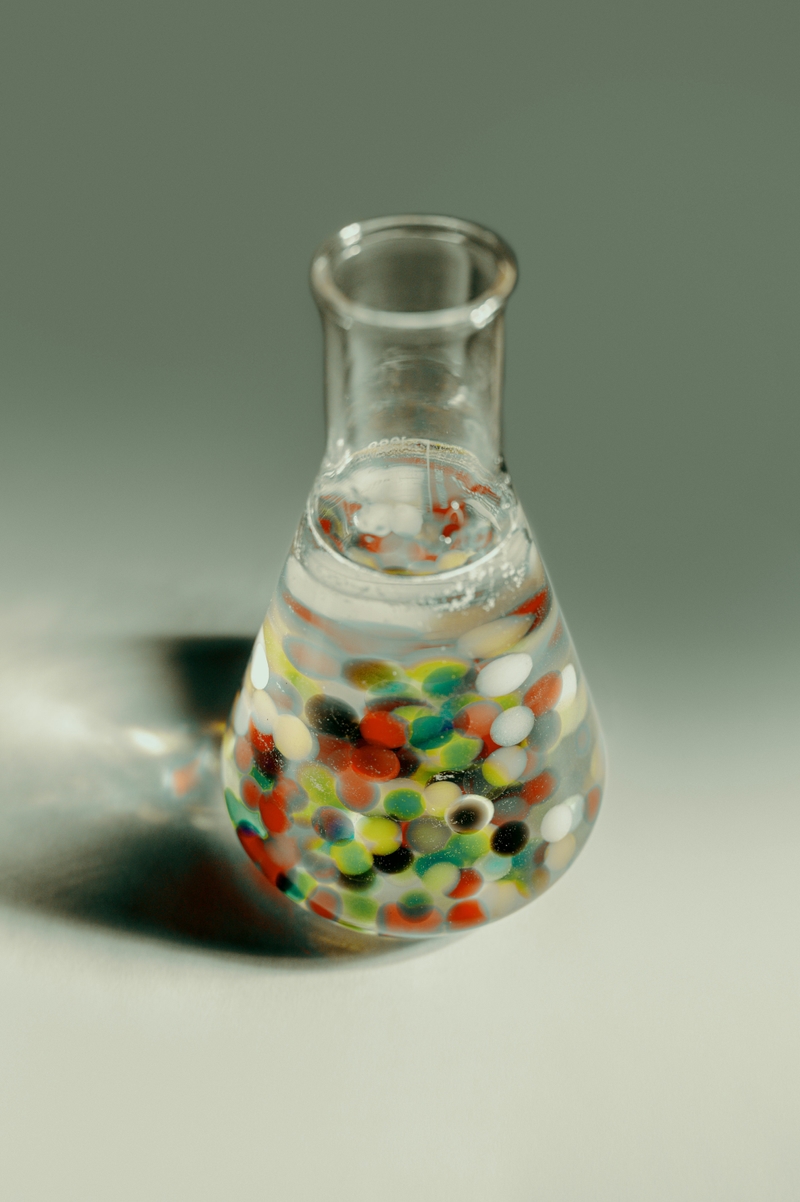
Beyond these chemicals, our exposure to novel sources of particulate matter is an emerging and potentially significant source of human health risk. Perhaps the most prominent example are micro- and nanoplastics, which are persistent pollutants, and potential vectors for exposure to toxic chemicals. They are now being detected not just in the environment but also in human tissues, including blood, liver and placenta. Just as with many chemicals, these micro- and nanoplastics have not yet been tested and proven to be safe for human health.
Our track record of DeToxification
We have been investing with a “Detoxification” lens via our Consumer ClimateTech thesis: (i) through downstream B2B interventions at the input and material level; and (ii) through consumer brands that showcase and accelerate the adoption of new clean technologies.
By way of example, on the inputs side, Nature Coatings has developed BioBlack - a nontoxic, bio-based black pigment made from wood waste as an alternative to conventional carbon black (classified as a Group 2B carcinogen). Notpla, whose seaweed-based coatings for foodservice applications are PFAs-free, which are soon to be banned in EU and US. Naturbeads are replacing synthetic inputs like plastic microbeads (banned from rinse-off cosmetics on environmental grounds and expanding further under EU review). And Matter is building filtration technology designed to capture microplastics and microfibres before they enter the environment, including through laundry systems.
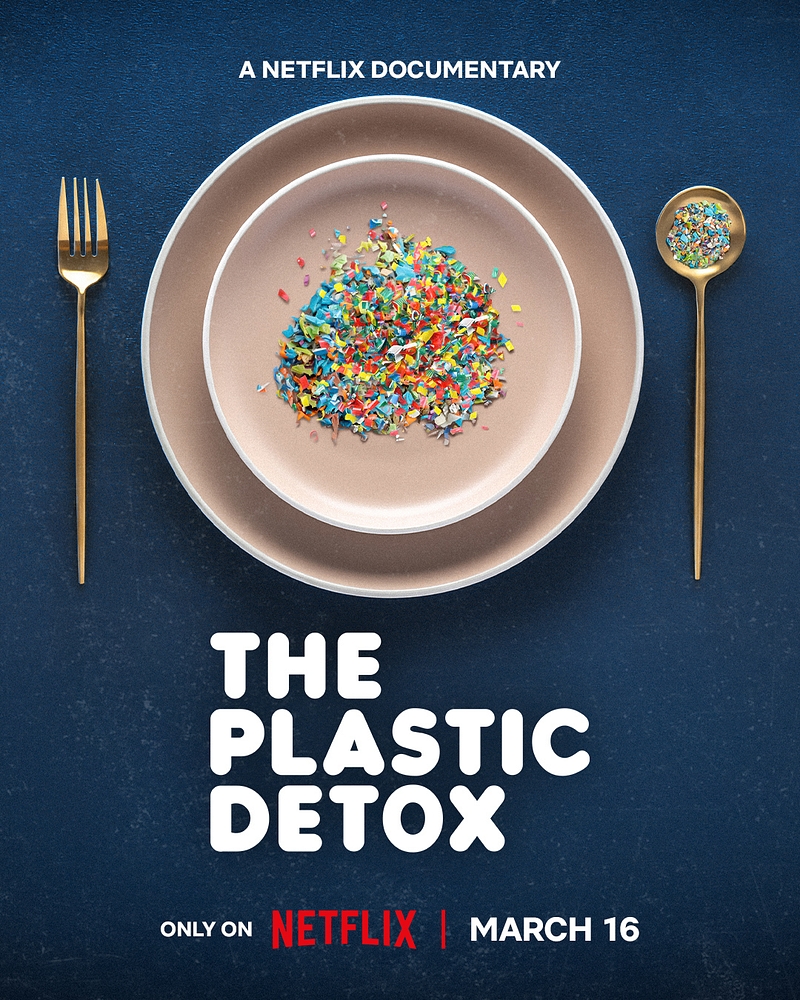
Our thesis also sees a role for these innovations to be showcased in disruptive consumer brands too. Pangaia was built from day one as a showroom for next generation material science. Our partners at Squared Circles build new brands at this intersection between human and planetary health around the most pressing issues. As a great recent example, Swim Club was launched to address male fertility decline which has been the subject of scientific studies around chemicals exposure and new documentaries like the Plastics Detox on Netflix.
Unpacking the investment strategy
Across the work of our portfolio, we have seen the same underlying pattern driving change: replacing toxicity that is deeply embedded in product performance, where regulation and consumer scrutiny are rising, and where new technologies can remove harmful chemistry without compromising efficacy, feel or cost. And this is our key filter: new technologies that can enable detoxification to become a genuine source of competitive advantage rather than just a compliance exercise.
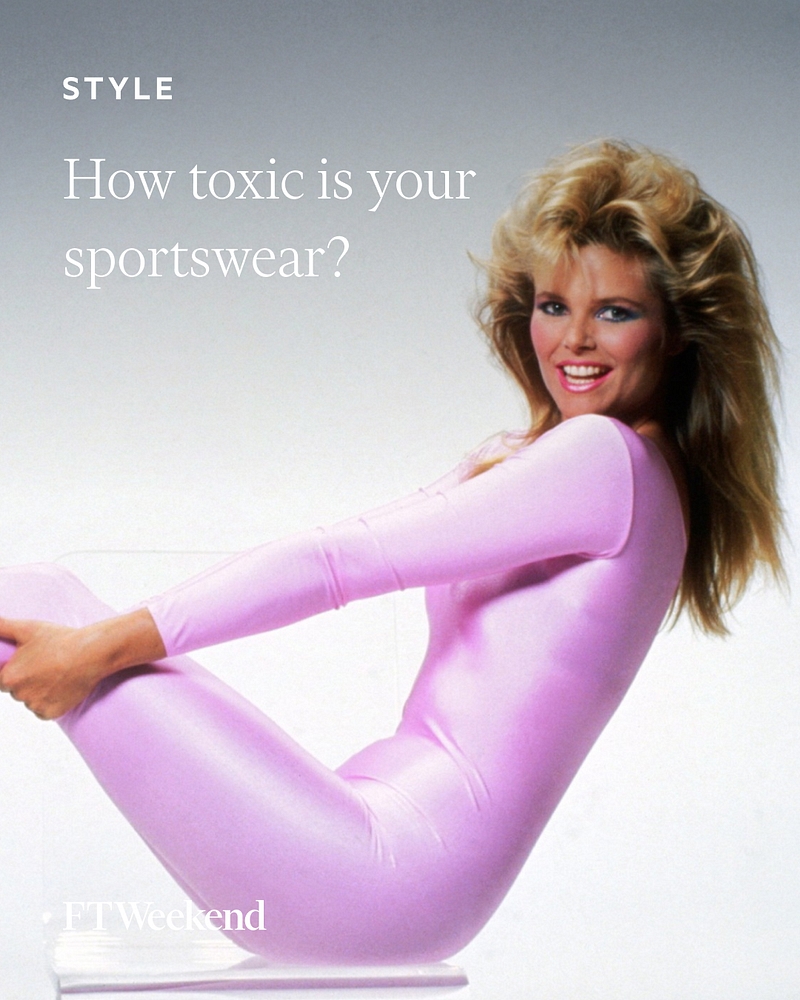
As highlighted in this piece by Noah Geeves of Deep Science Ventures (who have been studying this topic deeply too), there is a clear pattern the market has seen before in consumer goods: see “organic” food and “clean” beauty as huge growth drivers in food and beauty. Now, we believe, comes “detoxification of all materials”. The same ingredient-level scrutiny that moved through fresh produce, supplements, skincare and cosmetics is now beginning to extend into packaging, textiles, coatings and household products. Case in point, the Financial Times recently asking "How toxic is your sportswear?" and the Times pointing to toxicity in UK sofas.
Consumers are starting to care not just about what they ingest or apply to their skin, but what sits in the products they cook with, wear, sleep on and live around.
The most attractive opportunities emerge when consumer pressure and regulatory enforcement converge. Regulation on its own can create slow, technical B2B markets. Consumer demand on its own can remain niche. But when both move together — as they increasingly are in categories like PFAS, food-contact chemicals and personal care ingredients — markets can tip much faster.
The innovation pace of the chemicals industry has always faced long lead times so that innovation gap is what makes this moment especially interesting for disruptors. Forcing incumbents to move via partnership, acquisition or a change in strategy.
And these are not niche substitution opportunities. The incumbent chemistry pools are already enormous: crop protection chemicals alone are roughly a $50–85 billion global market, plasticisers around $19–20 billion, bisphenol A around $20 billion, and the fluoropolymers segment of PFAS-related chemistry more than $10 billion. Even before you size the downstream applications in coatings, packaging, textiles and personal care, the underlying markets already run comfortably into the hundreds of billions of dollars.
In all of these categories, the winning companies will be those that can break the traditional performance-cost-sustainability trade-off and deliver products that are not just safer, but better.
As a call to action - we are particularly excited to find more technologies that:
- Replace key functional inputs: safer plasticisers, additives and preservatives.
- Enable clean circularity: separation and decontamination that make recycling streams commercially viable and chemically safer.
- Redesign performance materials: to match or outperform incumbents without toxic trade-offs - increasingly with data-led approaches.
- Build toxicity intelligence: detection, exposure mapping, traceability and compliance infrastructure.
And the investment frontier may also be widening
As with parallels as to the need for the emerging field of carbon capture given our collective admission that carbon emissions are past mitigation alone. What is especially interesting now is that the frontier in toxicity for new innovation is moving beyond substitution and into exposure reduction.
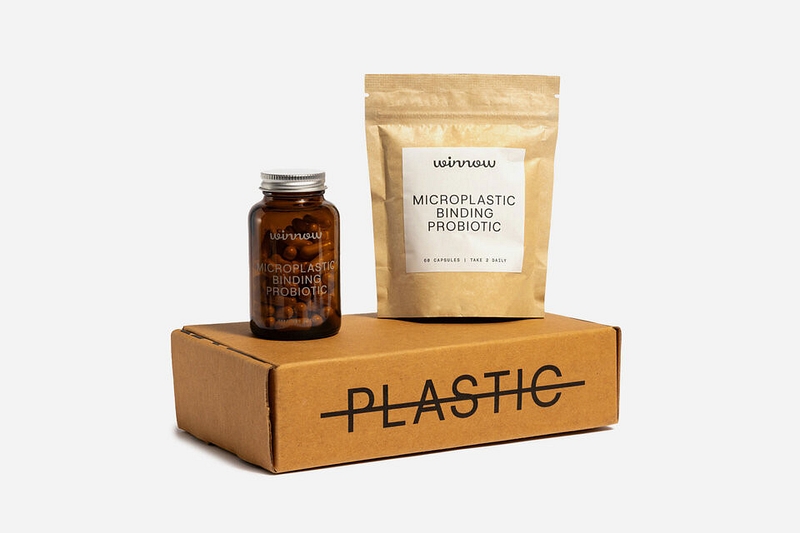
One emerging edge of this thesis is body-burden reduction: technologies aimed not only at keeping hazardous chemicals out of products, but at supporting their removal from biological systems. Cambiotics and Neutroat are examples as well as Winnow Labs. Cambiotics’ approach builds on University of Cambridge research showing that certain human gut microbes can absorb PFAS and increase excretion in mice; the researchers described this as the first evidence that the gut microbiome could play a helpful role in removing PFAS from the body, while also stressing that this has not yet been directly proven in humans. The expansion to exposure mitigation and, eventually, human detoxification itself is an area we are interested to understand better.
Underwriting toxicity
We believe toxicity deserves the same analytical rigour in impact-led venture underwriting that carbon has received for the past decade.
The planetary boundary for "novel entities" — synthetic chemicals and human-made substances — was breached in 2022, yet it remains the only breached boundary without a quantitative control variable. Carbon has ppm CO₂; biodiversity has extinction rates; chemical pollution has no agreed metric.
As noted: this measurement gap is itself an investment opportunity. And of more troubling note: the absence of an agreed metric also means the boundary breach may be significantly underestimated, since current assessments rely on production volumes as a proxy rather than measured environmental or biological concentrations.
CRISP
From its inception, our Circular Regenerative Impact and Sustainability Protocol (CRISP ) was designed to systematically evaluate a company's net positive or negative contribution across all nine Planetary Boundaries. To directly address the critically breached boundary of "novel entities" (synthetic chemicals), we are actively extending CRISP to include rigorous toxicity screening. This targeted expansion ensures that toxicity assessment now sits alongside carbon and resource flows as a first-class dimension of our diligence. By systematically interrogating hazard displacement and substitution integrity, this extended CRISP framework guarantees our investments don't just reduce emissions and waste, but actively detoxify the material economy.
Questions we are asking ourselves
- Hazard displacement — what toxic class is being displaced, and is the reduction absolute or merely relative?
- Substitution integrity — does the replacement avoid regrettable trade-offs?
- Circularity × toxicity — does circularity reduce harm or recirculate it at the end of life? Does the material remain benign through incineration, composting, or recycling?
Ultimately, we have firm conviction that toxicity is an important driver of our deteriorating human and planetary health and the category ”re-defining” companies will not win by asking the market to compromise. They will win by making the safer choice and the better product. Because the next industrial winners, in our view, will detoxify the material economy — and do it in ways that are scalable, defensible and commercially unavoidable.
Disclaimer: This article is intended for educational purposes only. Certain information contained herein has been obtained from other parties. While such sources are believed to be reliable, neither the Fund, the General Partner, the Management Company, nor their respective affiliates assume any responsibility for the accuracy or completeness of such information. The ecosystem mapping depicts a broad and non-exhaustive sample of companies at various business stages. Regeneration.VC holds an investment interest in some of these companies. The contents of this work should in no way be construed as investment recommendation guidance from Regeneration.VC. The information set forth does not purport to be complete and no obligation to update or otherwise revise such information is being assumed.